The Evolution of Fantasy Cinema
An exploration of how fantasy cinema evolved from ancient myth to Avatar, shaped by culture, technology, and the coming age of AI world-building.

Return of the King
There is a lot to unpack on this topic, so I am going to go with broad strokes for now and perhaps expand on each section at a later date. So here it goes…
Fantasy cinema did not begin with CGI.
It did not begin with Tolkien.
It did not even begin with the first published novel.
Fantasy cinema begins with humanity attempting to visualise the invisible.
Before cameras, before scripts, before production design departments — there were myths told around fires. Gods descended. Giants roamed. The dead returned. These stories were not “fantasy” to their tellers. They were explanations for the chaos.
Cinema has now inherited that burden. When I say cinema, I mean screen content — what can I say, I am old fashioned.
And from its earliest days, it tried to render the mythic visible.
From Myth to Moving Image
Ancient epics like the Epic of Gilgamesh, the Odyssey, and the Norse Prose Edda established the structural DNA of fantasy:
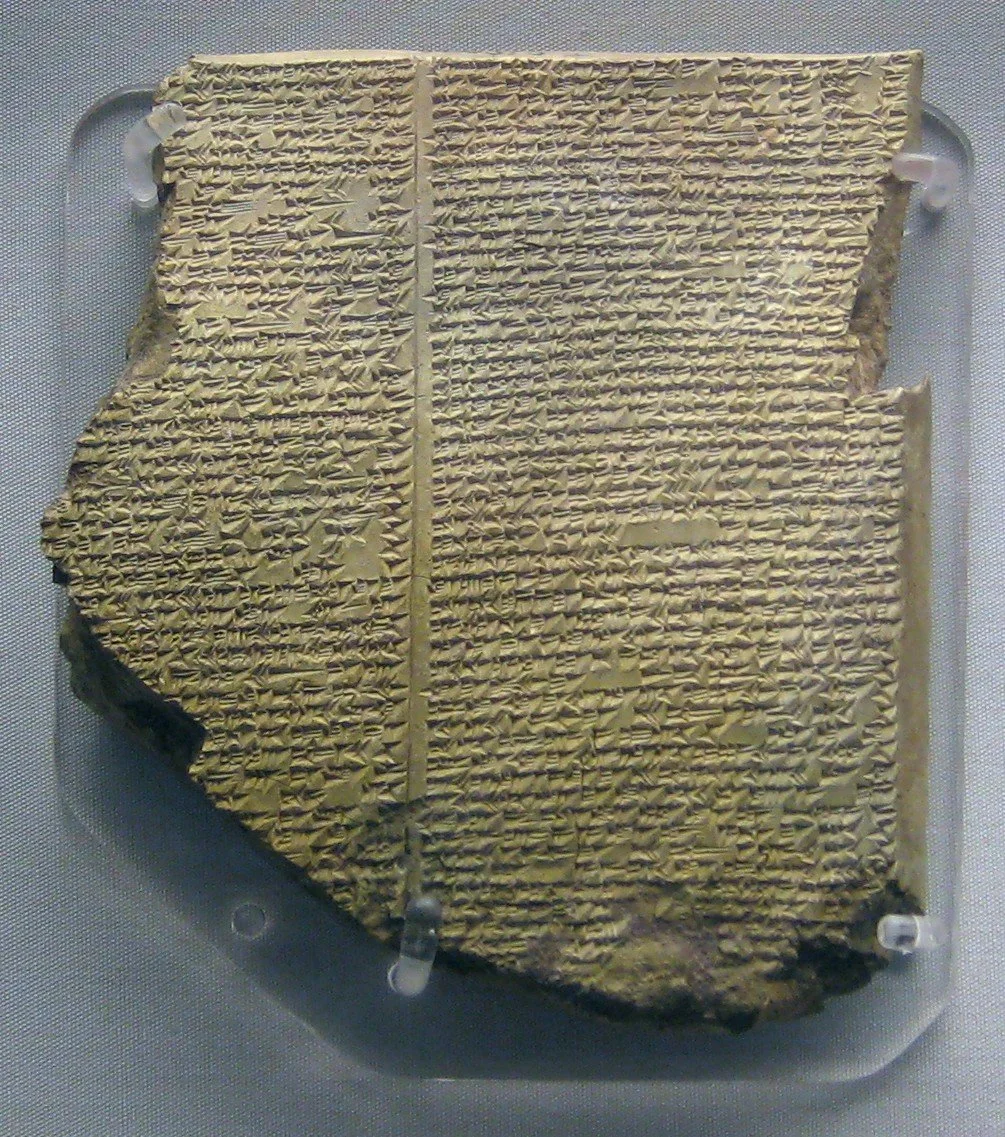
Clay stones of The Epic of Gilgamesh
Heroic quests
Divine intervention
Monsters as metaphors
Apocalyptic prophecy
The tension between fate and free will
These were not escapist tales. They were existential architecture.
When cinema arrived at the turn of the 20th century, it inherited those mythic impulses. Early filmmakers realised immediately that film could do something the fire stories could not — it could manipulate reality and present imagination right in front of our eyes. It created a profound and vivid experience. We take for granted the blessing we have of being able to escape wherever we are and whenever it is, especially now that most platforms of content sit comfortably in our phones.
Now enter Georges Méliès, whose 1902 film A Trip to the Moon demonstrated that cinema could fabricate worlds. Painted backdrops, smoke, jump cuts — illusion became spectacle.
Fantasy cinema was born not from literary adaptation, but from technological trickery.
But spectacle alone does not sustain a genre.
Culture does.
The Gothic Bridge: Horror, Romance and Re-Enchantment
Between ancient myth and modern fantasy cinema stood the Gothic revival.
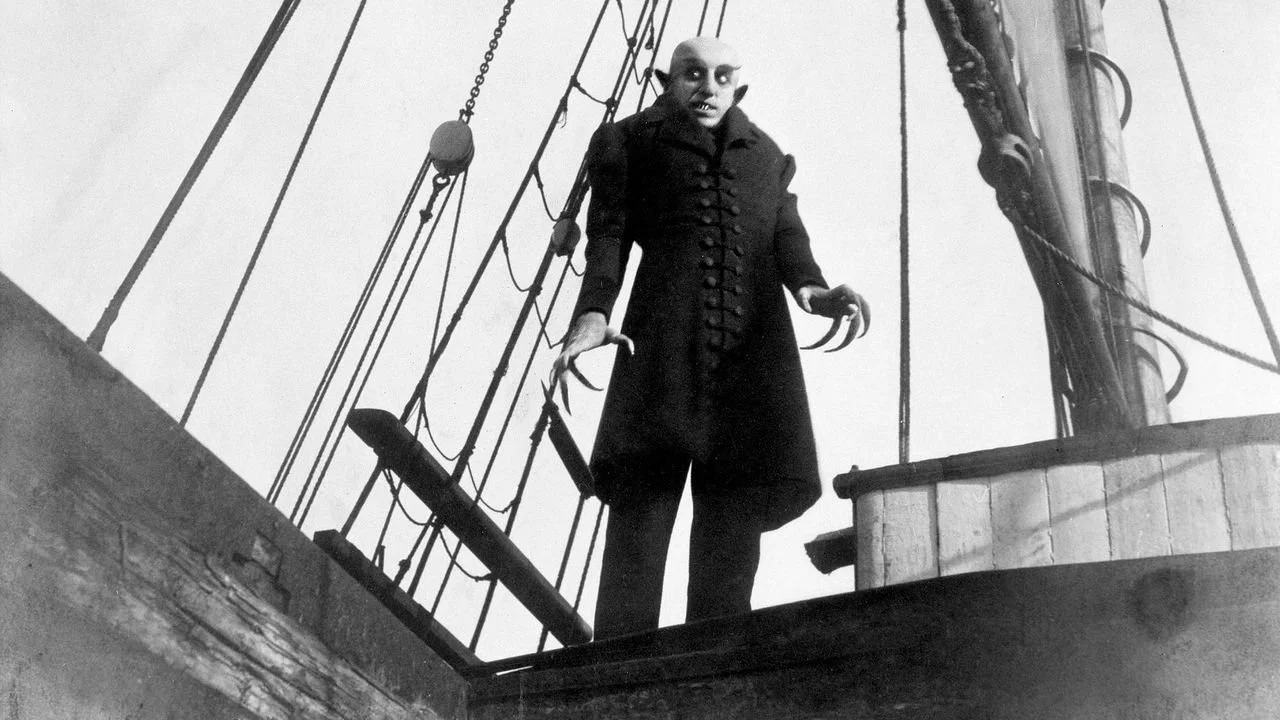
Nosferatu
Long before Tolkien, Europe’s imagination was reignited through Romanticism, folklore collections, and horror literature. Classic myths and legends were reshaped through a darker, more psychological lens. Castles returned. Curses returned. The supernatural returned — but now filtered through atmosphere and dread.
Fantasy horror became a crucial stepping stone.
Films like Nosferatu, Dracula, and later gothic reinterpretations of folklore reintroduced mythic beings to the screen with emotional weight. These were not secondary worlds yet — but they restored the idea that the supernatural belonged in serious cinema.
The Gothic era acted as a cultural bridge:
Ancient legend → Romantic reinterpretation
Romanticism → Early horror cinema
Horror cinema → Modern fantasy aesthetics
Without that re-enchantment period, high fantasy may never have found mainstream footing.
Space Opera and the Cinematic Expansion of Myth
While sword-and-sorcery was developing, another branch of fantasy emerged through science fiction.
Space opera — particularly Star Wars — demonstrated that myth could wear technological clothing. Though often labelled science fiction, its structure is unmistakably fantasy:
A farm boy hero
A mystical energy force
An evil empire
A fallen knight
A chosen destiny
Space opera proved that fantasy did not need medieval architecture to function. It needed mythic structure.
Today, sci-fi fantasy remains one of the most dominant corners of the global film sector. It commands box offices, drives merchandising ecosystems, and sustains multi-decade franchises.
The aesthetic may be futuristic.
The skeleton is myth.
The Literary Backbone: Tolkien and the Secondary World
The modern conception of fantasy cinema owes many of its greatest successes to literature, particularly J. R. R. Tolkien and The Lord of the Rings.
Tolkien did something radical: he did not merely write a story. He constructed a secondary world with linguistic, geological, theological, and historical coherence.
Cinema struggled to adapt this properly for decades.
Why?
Because the technology wasn’t ready.
Miniatures could only go so far. Optical effects had limitations. Creature realism was constrained. Large-scale battle scenes were logistical nightmares.
Fantasy cinema in the mid-20th century relied heavily on stop-motion (Ray Harryhausen), matte paintings, and theatrical performance styles. It carried myth, but rarely full immersion.
The ambition outpaced the machinery.
The 1980s: Fantasy Tests Its Limits
The 1980s marked a genuine attempt by cinema to seize fantasy’s crown.
Films such as:
Excalibur
Conan the Barbarian
The NeverEnding Story
Legend
Willow
proved that studios were not waiting for other mediums to lead.
They were pushing.
Animatronics, prosthetics, elaborate sets, matte paintings, and practical creature design created ambitious worlds. These films carried mythic conviction and visual boldness. Some became cult classics. Some struggled commercially.
What limited them was not imagination.
It was infrastructure.
Rendering armies, ecosystems, and non-human characters convincingly at scale remained difficult. The desire to dominate fantasy storytelling was already present. The tools were simply not yet fully matured.
Anime and the Global Expansion of Fantasy
While Western cinema wrestled with practical limitations, Japanese animation was quietly redefining fantasy on screen.
Anime demonstrated that world-building could be visually unrestrained. Hand-drawn and later digitally animated landscapes allowed for:
Floating cities
Environmental allegories
Mythic spirits
Apocalyptic dreamscapes
Studios such as Studio Ghibli and filmmakers like Hayao Miyazaki proved that fantasy could be intimate, ecological, and philosophical.
Anime’s influence on global fantasy aesthetics is profound — from creature design to emotional pacing. It expanded what fantasy cinema could feel like.
Not just epic.
But lyrical.
The Cultural Explosion of Fantasy Beyond Film
While cinema was technically leading, fantasy was also thriving elsewhere.
Dungeons & Dragons turned fantasy into participation.
Magic: The Gathering turned it into collectable mythology.
Video games like World of Warcraft made worlds persistent and social.
Comics such as Conan the Barbarian visualised sword-and-sorcery aesthetics long before prestige television.
Fantasy was no longer niche. It was infrastructure in society.
By the 1990s and early 2000s, audiences had been trained to expect:
Detailed lore
Internal magic systems
Political complexity
Moral ambiguity
Cinema was determined not to be outpaced by fantasy’s expansion across other mediums. It escalated both culturally and technically, competing for myth-making dominance.
The Turning Point: The Lord of the Rings
When The Lord of the Rings, directed by Peter Jackson, arrived, it was the convergence of:

BTS of The Two Towers
Literary depth
Practical craftsmanship
Emerging CGI
A culture primed by decades of fantasy gaming
Miniatures (“bigatures”), forced perspective, motion capture, and digital crowd systems allowed Middle-earth to feel inhabited rather than staged.
Crucially, the films treated fantasy seriously. Not as camp. Not as a children’s game. As mythic drama.
This legitimised epic fantasy within mainstream cinema.
Avatar and the Question of Timing
I would say the novelty of practical effects needs a resurgence, but as some say, “We may never see their kind again.”
Before that was a thing, many films tried to replicate the Peter Jackson effect and fell short. Then came Avatar, directed by James Cameron.
Avatar is an interesting case study. For me, those films are amazing and a true cinematic experience, despite the onslaught I will get for saying that to many people.
Cameron had conceived aspects of the project years earlier but delayed production because the technology wasn’t ready. Performance capture, rendering capability, stereoscopic integration — the ecosystem needed to mature.
That restraint mattered.
When Avatar was released, Pandora did not feel like a digital experiment. It felt like a biosphere.
This highlights a core truth in the evolution of fantasy cinema:
Ambition must align with technology.
Too early, and the illusion collapses.
Too late, and the culture moves on.
Cultural Tone: Why Fantasy Grew Darker
Fantasy cinema did not only evolve technically.
It evolved psychologically.
The tonal shift from bright mythic heroism to moral ambiguity did not happen by accident. It reflects the emotional climate of the eras in which those stories were told.
1. Post-War Optimism vs Late-Modern Uncertainty
Mid-20th-century fantasy often leaned toward moral clarity. Even when the stakes were high, good and evil were legible.
After World War II, Western culture gravitated toward stories of restoration and moral certainty. Narratives that reinforced heroism and order felt stabilising.
But by the late 20th century and early 21st century, the cultural mood shifted:
Endless geopolitical conflict
Economic instability
Institutional distrust
Climate anxiety
Digital surveillance
Political fragmentation
Certainty eroded.
Fantasy responded.
2. The Rise of Moral Ambiguity
Modern fantasy increasingly explores:
Corrupt kingdoms
Compromised heroes
Manipulative gods
Cycles of violence
Power as contamination
Heroes became reluctant, damaged, or morally conflicted.
Where ancient myth presented gods as powerful but structurally necessary, modern fantasy often portrays divine or institutional power as flawed or destructive.
It is a reconfiguration of trust.
3. From Fate to Systems
Ancient epics like the Odyssey processed mortality and fate within a stable metaphysical hierarchy.
Modern fantasy increasingly interrogates systems:
Political systems
Religious systems
Economic systems
Social hierarchies
The enemy is often structural, not singular.
Instead of “slay the dragon,” it becomes:
“Dismantle the system that breeds dragons.”
We no longer fear isolated monsters. We fear systemic collapse.
4. Climate and the Apocalyptic Imagination
Environmental anxiety has deeply influenced modern fantasy aesthetics.
Worlds feel:
Scarred
Polluted
Dying
Frozen
Desertified
Apocalypse is no longer mythic punishment. It is plausible projection.
We are not imagining the end of the world as legend.
We are imagining it as possibility.
That darkens tone.
5. Violence as Realism
Earlier fantasy often stylised violence. Modern fantasy depicts it with consequence.
Grit is not just aesthetic.
It is a demand for plausibility.
6. Distrust of Institutions
Modern fantasy frequently questions:
Monarchies
Churches
Magical orders
Empires
Ancient myth often legitimised power structures.
Modern fantasy frequently destabilises them.
The throne is no longer sacred.
It is suspect.
7. Yet the Mythic Core Remains
Despite the darkness, the structural backbone of fantasy has not changed:
Sacrifice still matters
Loyalty still matters
Hope still exists
Ancient myth processed mortality.
Modern fantasy processes instability.
Both aim to orient the human psyche toward meaning.
8. Myth Adapts to Cultural Temperature
Every era produces the fantasy it needs.
Periods of stability produce romantic epics.
Periods of upheaval produce fractured worlds.
The darker tone is not decay of the genre.
It is responsiveness.
The AI Horizon: Opportunity and Restraint
Now we stand on another technological threshold: artificial intelligence.
AI will undoubtedly transform fantasy cinema in specific ways:
Rapid environment generation
Concept art acceleration
Procedural world-building
Previsualisation at unprecedented speed
Crowd simulation and background ecosystem logic
Used correctly, AI can expand environments — forests, cities, alien ecologies — making secondary worlds richer and more cost-efficient to produce.
Where I draw the line personally is character.
Performance is human.
Emotion is human.
Imperfection is human.
Worlds are architecture.
Characters are souls.
Cinema is not just image. It is performance. Strip away the performer, and you risk reducing myth to simulation. Technology may build the cathedral, but human presence fills it with meaning.
I have no philosophical objection to AI assisting in environmental design or ecosystem complexity. Fantasy worlds are, by nature, constructed. Tools that enhance that construction can be valuable.
But characters built entirely by machine risk hollowing out the emotional core of myth.
Fantasy has always been about exploring humanity through exaggeration. Remove the humanity, and you remove the function.
Where Fantasy Cinema Goes Next
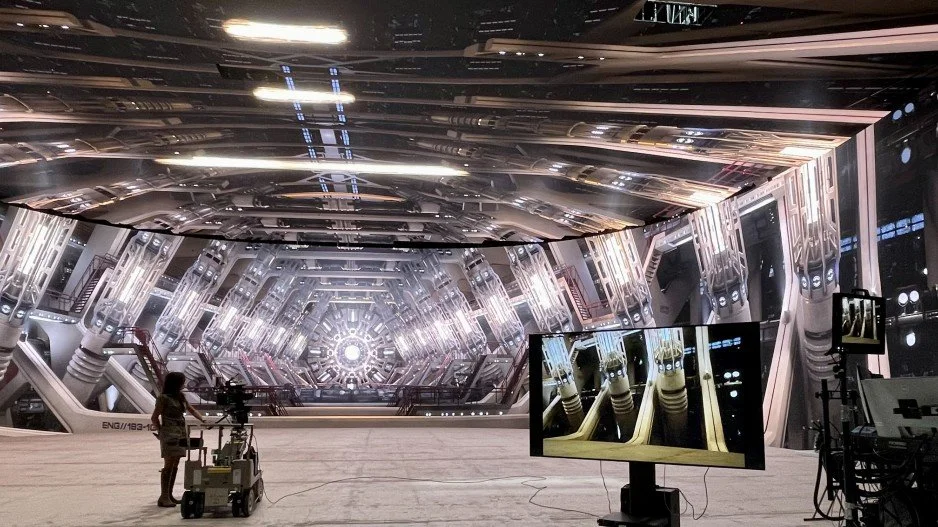
Three frontiers feel inevitable:
Hyper-immersive world-building — environments rendered in real time, evolving across episodes and formats.
Cross-media universes — film, game, novel, and interactive components built simultaneously.
Creator-driven mythologies — worlds that originate from singular vision but expand across platforms.
The next great fantasy worlds will not be films alone.
They will be ecosystems.
Final Thought
From the clay tablets of Gilgamesh to LED volume stages and AI-assisted rendering, the history of fantasy cinema has always been shaped by two forces:
Culture and capability.
We tell the stories we need.
We build the tools required to show them.
Technology will continue to evolve. AI will reshape production pipelines. Virtual worlds will become more seamless than ever.
But the core question remains unchanged since the first myth was spoken:
What does this story reveal about us?
As long as fantasy cinema remembers that — it will continue to evolve without losing its soul.
If you want to hear more about anything specific in this blog, please let me know, and I’d be happy to dive into it. I am a fantasy nerd after all.
Quest logged. Quest complete.